Failed EICR: What C1, C2, C3 and FI Codes Mean and What They Cost
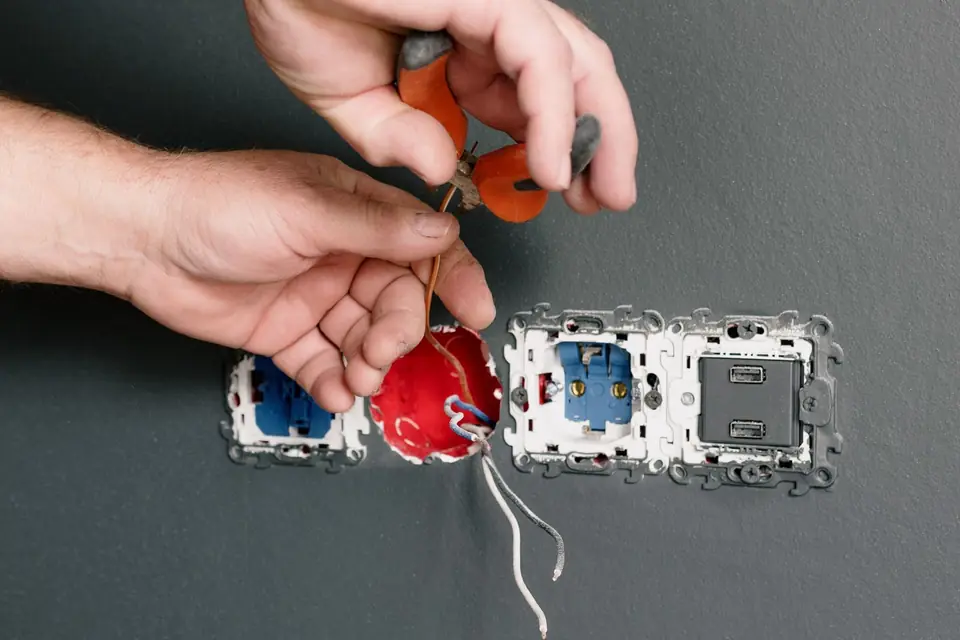
A failed EICR is one marked "unsatisfactory" in the overall assessment, and for a landlord in England that starts a 28-day clock. Most failures are C2s, not C1s, and most C2 fixes cost £80 to £800. This guide explains the EICR codes C1, C2, C3 and FI, what an unsatisfactory report obliges you to do, the ten most common C2 findings with the fix and price for each, and how to challenge a code. The EICR cost guide covers the report itself.
In this guide
EICR codes C1, C2, C3 and FI: what each one means EICR unsatisfactory: what happens next The ten most common C2 findings and what they cost Disputed codes: C2 versus C3 and second opinions Can the tenant stay in the property? Remedial work and re-test costs What happens if you ignore it How to avoid a fail next time Frequently asked questionsEICR codes C1, C2, C3 and FI: what each one means
Every observation on an Electrical Installation Condition Report carries one code, taken from the model report form in BS 7671 (the Wiring Regulations) and applied using Electrical Safety First's Best Practice Guide 4.
| Code | Wording on the report form | What it means | Report result | Landlord duty |
|---|---|---|---|---|
| C1 | Danger present. Risk of injury. Immediate remedial action is necessary | Someone is at risk now | Unsatisfactory | Made safe on the spot; fixed within 28 days |
| C2 | Potentially dangerous. Urgent remedial action is necessary | Would become dangerous if a fault or other foreseeable event occurred | Unsatisfactory | Fixed within 28 days |
| FI | Further investigation is advised (A4:2026 form); required without delay (A2:2022 form) | A possible C1 or C2 not confirmable within the limits of the inspection | Unsatisfactory on the A2:2022 form; advisory on the A4:2026 form | Investigated within 28 days |
| C3 | Improvement recommended | Not dangerous; a change would improve safety | Satisfactory | None |
Wording from the IET's BS 7671 model forms and Best Practice Guide 4 issue 7.4 (August 2026); duties from regulation 3 of the 2020 regulations.
BS 7671:2018+A4:2026 was issued on 15 April 2026 and its form says a C3 or FI is advisory and does not affect the overall assessment. The A2:2022 form stays valid until 15 October 2026 and tells the inspector to mark an FI as unsatisfactory, so two reports on the same installation can differ on an FI alone. Whichever form was used, regulation 3(4) gives you 28 days to have further investigative or remedial work carried out.
EICR unsatisfactory: what happens next
An unsatisfactory report puts you on a timetable under regulation 3:
- Within 28 days, starting with the date of the inspection (or sooner if the report says so), have the further investigative or remedial work done by a qualified person.
- Get written confirmation from the electrician that the work is complete; a minor works certificate or a fresh satisfactory EICR both count.
- Within 28 days of the work being finished, give that confirmation and a copy of the original report to every existing tenant and to the council, automatically rather than on request.
- Copies of the report itself go to existing tenants within 28 days of the inspection, to new tenants before they move in, to prospective tenants within 28 days of a request, and to the council within 7 days of a written request.
A C1 is different: the electrician must tell you at the time, in writing, and should make the danger safe before leaving site, even if that means isolating a circuit. There is no extension for a bigger job; councils look at whether you acted promptly, so keep the booking confirmation and put the deadline in the compliance calendar.
The ten most common C2 findings and what they cost
Most C2s come from installations wired before RCD protection on sockets and main bonding were standard. The table gives the ten that appear most often, the usual fix and its September 2026 price outside London; add 25 to 35 percent in London (see the regional EICR prices).
| Finding | Why it is C2 | Usual fix | Cost |
|---|---|---|---|
| No RCD protection on socket circuits | Sockets that could feed outdoor equipment, and bathroom sockets | RCBO on the circuit | £120 to £200 per circuit |
| No main protective bonding | Gas and water pipes not connected to the main earthing terminal | Bonding conductors to both entry points | £80 to £150 |
| Damaged accessories | Cracked sockets or switches; C1 if live parts can be touched | Replace the accessory | £40 to £80 each |
| Plastic consumer unit with no RCDs | Missing RCD protection | Metal RCBO board | £400 to £800 |
| Inadequate earthing | No reliable earth, or a gas or water pipe used as the earth | Earth rod, or a new earthing conductor | £150 to £350 |
| Borrowed neutral | One neutral shared by two circuits | Trace and separate the neutrals | £100 to £300 |
| Unenclosed connections | Cable joints with no enclosure | Junction box or maintenance-free connector | £40 to £100 per joint |
| Wrong sockets or cable in a bathroom | A socket less than 2.5 metres from the bath or shower zone, or no RCD on it | Remove the socket; add an RCBO | £60 to £150, plus £120 to £200 for the RCBO |
| Old rubber or crumbling cable | Insulation that breaks away from the conductor | Rewire the circuit, or the house | £300 to £700 per circuit; £3,500 to £6,000 for a 3-bed rewire |
| No supplementary bonding in an old bathroom | Required where the bathroom circuits lack RCD protection | Bond the pipework, or add an RCBO instead | £100 to £220 |
Costs include VAT and the written confirmation, September 2026, outside London. Code basis from Best Practice Guide 4, issue 7.4.
The plastic consumer unit is the most misunderstood item on any report: Best Practice Guide 4 codes an existing plastic board C3 only under a wooden staircase or on the sole escape route, and otherwise does not record it. The C2 is the missing RCD protection inside. Supplementary bonding can likewise be omitted where the bathroom circuits are RCD protected, so the cheaper fix is often an RCBO.
Disputed codes: C2 versus C3 and second opinions
Best Practice Guide 4 is guidance, not law, though an inspector who departs from it must provide evidence to justify why. Most disputes sit between C2 and C3, where one electrician's £200 report becomes another's £1,000 job.
| Observation | Best Practice Guide 4 position | Where the argument is |
|---|---|---|
| No RCD on a socket circuit | C2 if the sockets could feed outdoor equipment or serve a bathroom; C3 otherwise | Whether a ground-floor socket could run a lawnmower |
| No RCD on lighting circuits | C3 | Some code C2 for cables buried less than 50 mm; the guide says C3 |
| Plastic consumer unit | C3 under a wooden staircase or on the sole escape route; otherwise not recorded | A C2 for the case alone is outside the guide |
| No supplementary bonding in a bathroom | C2 unless the conditions for omitting it are met | Whether the inspector checked those conditions |
| Rewireable fuses | Not a code where they give adequate protection | Oversized fuse wire is a C2; the fuse type is not |
From the examples table in Best Practice Guide 4, issue 7.4 (August 2026), which says its examples are not exhaustive.
If a code looks wrong, work through it in this order:
- Ask for the reasoning in writing, with the guide example or BS 7671 regulation relied on, and for photographs.
- Check the limitations in Section D. An FI caused by a limitation can be cleared by a second visit.
- Get a second opinion. The regulations require a report from a qualified person, not a particular one, so a second EICR from a different registered electrician at £120 to £260 (see the EICR cost guide) is legitimate.
- Use the scheme. NICEIC, NAPIT and the other schemes run a free complaints process for reports by their members.
- Do not ignore the first report. A later dispute will ask why you did nothing for 28 days. Keep both reports and a note of why you relied on the second.
Can the tenant stay in the property?
Yes. Nothing in the 2020 regulations requires a tenant to move out after an unsatisfactory report, and nothing makes the tenancy invalid. C2 means potentially dangerous, not dangerous now, and the regulations respond with a 28-day repair duty, not an evacuation.
The exception is a C1. The inspector should already have made it safe, usually by isolating the circuit, and told you and the tenant. If that leaves the home without heating, hot water or cooking, you also have a habitability problem under the Housing Act 2004 hazard rating system. Fix a C1 in days and offer a temporary heater while a circuit is off. Once the Renters' Rights Act landlord ombudsman is running (it follows the database, which opens on 15 December 2026), tenants will have a formal complaints route, so keep a paper trail.
You cannot treat the report as a reason to end the tenancy. Section 21 no longer exists since the Renters' Rights Act tenancy reforms commenced on 1 May 2026, and an unsatisfactory EICR is not a possession ground (see the Renters' Rights checker).
Remedial work and re-test costs
Whole-job prices for a three-bedroom house outside London, booked direct; an agent's contractor usually adds 15 to 25 percent (see the EICR cost guide). The certificate cost calculator adjusts for region and adds the gas check and EPC.
| Scenario | Typical findings | Remedial cost | Re-test or confirmation |
|---|---|---|---|
| Single C2, no board change | Missing bonding, or one damaged socket | £80 to £200 | £0 to £80; often included |
| Typical first-time fail | Bonding plus RCDs on two or three circuits | £300 to £600 | £0 to £80 |
| Board change | Plastic board with no RCDs, plus bonding | £500 to £950 | Included with the board certificate |
| Bathroom package | Socket removed, RCBO added, supplementary bonding | £250 to £550 | £0 to £80 |
| Partial rewire | Rubber cable on one or two circuits, borrowed neutral | £700 to £1,600 | £60 to £120 |
| Full rewire, 3-bed house | Rubber or lead-sheathed cable throughout | £3,500 to £6,000 | Included; an installation certificate replaces the EICR |
| Second-opinion EICR | Disputed C2s | £120 to £260 | Not applicable |
September 2026 ranges including VAT, outside London; add 25 to 35 percent in London and 10 to 15 percent in the South East. Redecoration is not included.
Ask for the work and the written confirmation as one price; a fresh satisfactory EICR afterwards resets the five-year interval. Repairs are normally deductible against rental income; see the running-cost guide and the rental yield calculator for the effect on net yield.
What happens if you ignore it
The enforcement route in regulations 4 to 12:
- Remedial notice. Once the council has reasonable grounds to believe you are in breach, it must serve a remedial notice within 21 days, giving you 28 days from service to do the work. Written representations within 21 days suspend the notice; the council has 7 days after that period to reply.
- Council does the work. If satisfied you have not complied, the council can arrange the work itself, with the tenant's consent and at least 48 hours' notice to the tenant, or without a notice where the report calls for urgent action. Appeals go to the First-tier Tribunal within 28 days.
- Cost recovery. A demand for the council's reasonable costs, payable 21 days after service unless you appeal.
- Financial penalty. Up to £40,000 per breach, with more than one penalty for a continuing failure. The cap was £30,000 from 1 June 2020 until 31 October 2025; the 2025 amendment regulations raised it to £40,000 from 1 November 2025.
- The database. The Renters' Rights Act landlord database, which opens on 15 December 2026, is designed to hold the same certificates, so a missing EICR will be visible before a property is marketed (see the Renters' Rights Act cost guide).
The most common fix is £80 to £200; the penalty is capped at 200 times that, and most landlord insurance policies require statutory safety compliance, so an unactioned C2 can void a fire claim.
How to avoid a fail next time
- Fix the known C2s first. No main bonding or a board without RCDs means you already know the result; book the work and the report as one visit.
- Act on the C3s from the last report. A C3 today can become a C2 as the standard moves on.
- Do not buy a 40-minute report. A cheap EICR with wide limitations produces FIs.
- Prepare the property. Clear access to the consumer unit, loft hatch and meter cupboard, and warn the tenant the power will be off.
- Diary it. The report lasts five years or until the inspector's shorter date. Put the expiry, the gas safety check and the legionella assessment in the compliance calendar.
- HMOs. Best Practice Guide 4 now lists a missing arc fault detection device in an HMO as a C3; the HMO licence cost guide covers the other conditions.
Frequently asked questions
What is a failed EICR?
A report whose overall assessment says unsatisfactory: any observation coded C1 or C2, and on the older A2:2022 form an FI. You then have 28 days from the inspection to get the work done.
What do the EICR codes C1, C2 and C3 mean?
C1 is danger present, fixed immediately. C2 is potentially dangerous, fixed within 28 days. C3 is improvement recommended and is not a fail. FI means further investigation; from 15 April 2026 the new BS 7671 form treats it as advisory, but the regulations still expect it within 28 days.
EICR unsatisfactory: what happens now?
Have the C1, C2 and FI items dealt with within 28 days, get written confirmation, and give it with a copy of the report to every tenant and the council within 28 days of the work finishing. The tenant does not have to move out.
Is a plastic consumer unit an EICR fail?
Not on its own. Best Practice Guide 4 codes an existing plastic board C3 only under a wooden staircase or on the sole escape route. It is a C2 when it has no RCD protection; a metal RCBO board costs £400 to £800.
Can I get a second opinion on an EICR?
Yes. The regulations require a report from a qualified person, not a specific one, so a second EICR from another registered electrician at £120 to £260 is legitimate.
What is the fine for ignoring an unsatisfactory EICR?
A remedial notice, council-arranged work with the cost recovered, and a civil penalty of up to £40,000 per breach. The cap rose from £30,000 on 1 November 2025.
Sources
Regulation 3 and regulation 11 of the 2020 regulations as amended (regulations 4 to 10 cover enforcement); the 2025 amendment regulations; GOV.UK guidance (1 November 2025); Best Practice Guide 4, issue 7.4 (August 2026); IET model report forms for BS 7671:2018+A4:2026 and A2:2022 and the IET's Wiring Matters note on FI; registered electricians' quotes, September 2026. See the methodology.